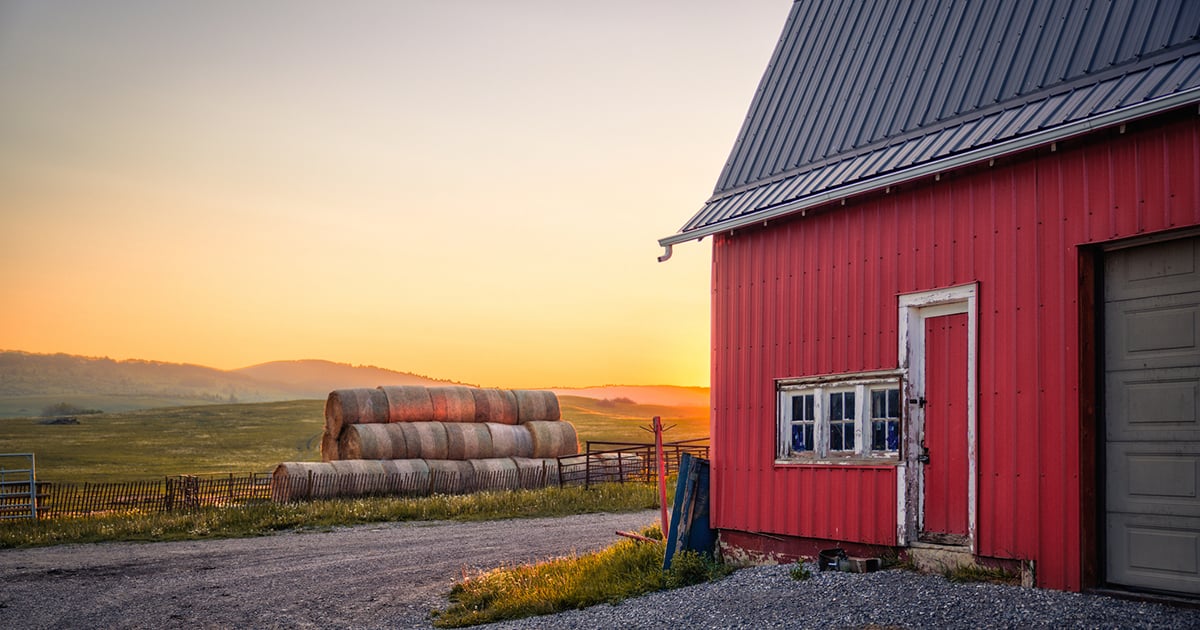
Drive down any country lane in America’s heartland and you’ll see reminders of an agricultural bygone era with dilapidated barns, rusting silos and weather-beaten outbuildings scattered across the landscape.
These scenes reflect a simple truth that no matter how much farming technology advances, agriculture remains at the mercy of the elements.
For modern operations, the basic engineering challenge is to design buildings for livestock housing, crop protection and harvested goods storage that resist moisture and humidity, temperature swings and constant exposure to seasonal extremes without degrading over time.
Insulated metal panels (IMPs) have emerged as a preferred building envelope solution for agricultural facilities precisely because they address these conditions head-on. From dairy barns to commercial greenhouses to climate-controlled grain storage, IMPs deliver exceptional durability, moisture resistance and thermal performance for long-term efficiency and protection.
Why Agriculture Needs a Better Building Envelope
Traditional agricultural buildings have often relied on post-frame construction with fiberglass batt insulation or basic metal sheeting. While these methods are familiar, they also come with well-known limitations.
Fiberglass insulation tends to absorb moisture over time, reducing its thermal performance and creating an environment where mold can thrive. Standard metal panels without continuous insulation form thermal bridges that lead to interior condensation. And conventional wall assemblies made of multiple components introduce seams and gaps that invite moisture, pests and outside air into the building.
For operations where temperature and air quality directly affect product integrity or animal health, those weaknesses can quickly translate to real losses.
IMPs solve many of these issues by integrating structural skin, insulation and vapor barrier into one factory-engineered system. Their continuous foam core, typically polyurethane or polyisocyanurate, delivers high R-values per inch without the thermal breaks or compression points common in batt systems. Precision tongue-and-groove joints reduce air leakage, while metal facings on both sides resist moisture, chemicals and physical wear.
The result is a tighter, cleaner and more durable building envelope built to perform year after year.
Barns and Livestock Facilities: Built to Take a Beating
Livestock facilities rank among the toughest building environments. Dairy barns, poultry houses and swine confinement structures generate extreme interior moisture from animal respiration and waste. Ammonia and other gases create corrosive conditions, while daily traffic and contact subject walls to continual physical contact.
IMPs are engineered to withstand these challenges through several critical performance properties:
-
Moisture management: The closed-cell foam core prevents water absorption, and metal facings form a continuous vapor barrier on both sides. In facilities with consistently high humidity, this design maintains thermal performance and structural integrity where batt insulation would deteriorate.
-
Durability under impact: Steel-faced panels stand up to bumps, scrapes and animal contact. Heavier-gauge facings can be specified for high-traffic zones, such as lower walls in cattle operations, to provide added protection.
-
Cleanability: Smooth metal finishes are easy to wash down and disinfect, unlike porous or textured materials that trap contaminants. For poultry and swine operations observing strict biosecurity standards, the ability to pressure-wash and sanitize between herds or flocks is a significant advantage.
-
Chemical resistance: Factory-coated metal facings resist degradation from ammonia, disinfectants and other harsh substances common in livestock spaces, preserving both appearance and performance over decades of use.
Greenhouses and Controlled-Environment Agriculture
Modern greenhouses have evolved well beyond the glass-and-frame designs most people imagine. Today’s commercial greenhouses and vertical farming operations rely on precisely controlled environments where temperature, humidity and light levels are managed with scientific accuracy.
IMPs play a valuable role in supporting these controlled conditions through superior thermal and moisture performance.
-
Thermal efficiency: Maintaining stable growing temperatures is one of the largest energy expenses for any greenhouse or indoor farm. IMPs with polyurethane or polyisocyanurate cores deliver much higher R-values per inch than single- or double-wall polycarbonate systems, translating directly to lower heating and cooling costs, especially in regions with wide seasonal temperature swings.
-
Condensation control: When humid interior air meets a cold surface, condensation forms, eventually dripping onto crops or contributing to mold and corrosion. The thermal resistance of IMPs keeps wall surfaces warmer and above the dew point, greatly reducing these risks and helping preserve the growing environment.
-
Design flexibility: While opaque panels are not a replacement for traditional glazing, they are increasingly used for sidewalls, end walls and roofing sections in hybrid greenhouse designs. In fully enclosed indoor growing operations (such as vertical farms and cannabis cultivation facilities) IMPs provide the primary building envelope, where artificial lighting replaces sunlight entirely.
Storage Facilities: Protecting What You Harvest
Agricultural storage facilities range from grain bins and cold warehouses to equipment barns and chemical storage buildings. Each faces unique environmental demands, but the core requirements remain the same: keep moisture out, maintain consistent temperatures and guard contents against pests and contamination.
IMPs meet these needs efficiently across all types of storage applications.
-
Grain and commodity storage: Maintaining proper temperature and humidity is critical to preserving grain quality and preventing spoilage. The continuous insulation and tight interlocking joints of an IMP building envelope minimize thermal cycling and interior condensation, helping maintain the dry conditions that discourage mold growth and insect activity.
-
Cold and cool storage: IMPs have long been the preferred wall and ceiling system for commercial cold storage. The same properties (high R-values, vapor-tight connections and smooth, sanitary interior finishes) make them ideal for on-farm storage of produce, dairy and meat. These features lower energy consumption while safeguarding product freshness.
-
Equipment and input storage: Agricultural assets like machinery and chemicals require reliable protection from temperature extremes and moisture. IMP-clad structures shield equipment and materials from condensation, rust and degradation, extending service life and preserving product integrity.
Long-Term Value for Agricultural Operations
The initial investment for an IMP building envelope is higher than for a basic metal structure with batt insulation, but that snapshot doesn’t tell the whole story.
IMP construction is faster and simpler because panels arrive ready for installation, combining structure, insulation and finish in a single unit. Fewer trades and shorter build times mean lower labor costs and quicker occupancy.
The continuous insulation core prevents thermal bridging, keeping interior temperatures stable and reducing HVAC energy use year after year. Equally important, the panels’ long-term durability (resisting moisture, impact, chemicals and UV exposure) translates to minimal maintenance and decades of reliable service.
For agricultural operations where building performance directly influences product quality, animal health and operating expenses, IMPs deliver lasting value that conventional systems can’t match.
Green Span Profiles designs and manufactures insulated metal panels specifically engineered for tough agricultural environments. Contact our expert team today to explore panel specifications for your next barn, greenhouse or storage facility project.