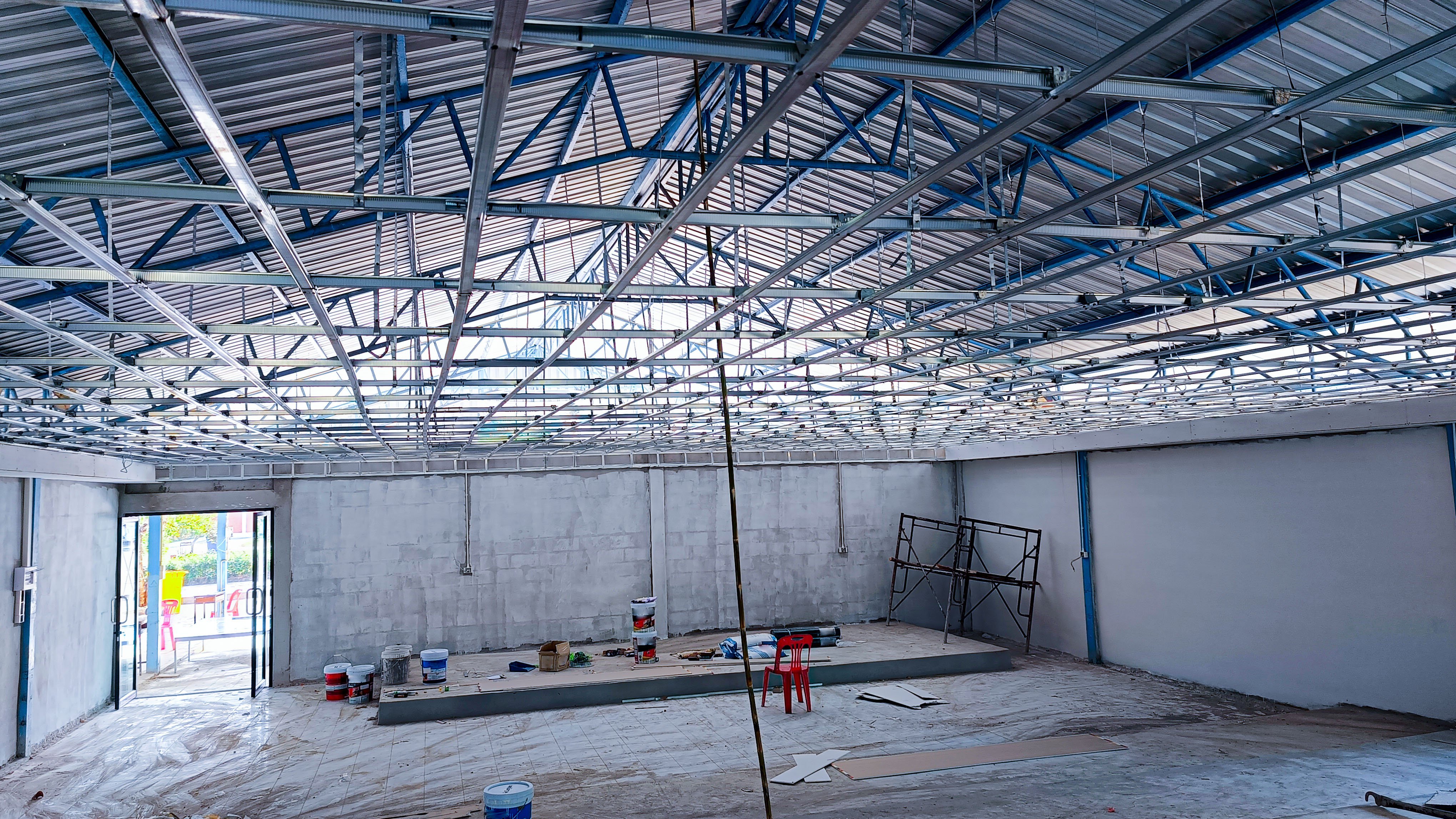
America’s commercial real estate sector is aging rapidly, with nearly 75 percent of the nation’s 5.9 million commercial buildings now over 25 years old, and 21 percent built before 1960.
According to revised figures from the U.S. Energy Information Administration’s (EIA) Commercial Buildings Energy Consumption Survey (CBECS), “Buildings built between 1960 and 1999 accounted for more than 50% of both total number of buildings and of floorspace. The median year of construction was 1981”.
These older structures represent prime opportunities for façade and envelope retrofits, especially as sustainability, efficiency, and occupant comfort become top priorities for building owners. With HVAC systems accounting for 35 to 40 percent of total energy consumption in commercial properties, upgrading the building envelope offers one of the most impactful ways to boost performance and reduce utility costs.
“Retrofitting is where operational excellence meets future readiness. It’s how organizations cut costs, meet mandates, and create better environments for the people inside them,” says facilities management leader ABM. “Energy retrofits aren’t just a sustainability initiative. They’re a business decision grounded in economics, regulation, and building performance.”
Retrofitting buildings with insulated metal panels (IMPs) is an ideal solution for aging facilities, delivering superior thermal performance, streamlined installation, and long-term maintenance savings. IMP retrofit wall systems can be installed using existing framing (whether metal columns and beams, wood construction, or concrete and CMU substrates), helping reduce thermal loads and drive significant energy and cost savings for building operators.
Read on to discover how upgrading your building envelope with IMPs from Green Span Profiles can help future-proof your facility while enhancing performance and value.
Why Retrofitting with IMPs Is an Economical Choice
Building owners looking to upgrade their properties often face a key question: should they undertake a full replacement or retrofit with modern materials? In many cases, retrofitting with IMPs delivers substantial economic advantages while enhancing building value and performance.
Retrofitting with IMPs is typically far more cost-effective than a complete teardown and rebuild. By installing IMPs over existing roofs or walls, property owners can avoid the expense and disruption associated with removing old materials. This direct-over retrofit method eliminates costly tear-off procedures, reducing demolition waste and shortening project timelines.
- Lower Labor and Material Costs: The prefabricated nature of IMPs streamlines installation, reducing man-hours and minimizing the need for custom onsite fabrication. Fewer workdays and less material waste mean a lower overall project price tag.
- Minimal Operational Disruption: Retrofitting is a minimally intrusive process. It lets businesses stay open and productive, avoiding the financial impact of extended downtime that comes with traditional renovations.
- Immediate and Long-Term Savings: With their high-performance insulation, IMPs help stabilize indoor temperatures, curb HVAC energy use, and enhance occupant comfort. Lowering utility bills results in significant savings over the lifecycle of the building.
Beyond the bottom line, investing in a retrofit with IMPs addresses many of the challenges older commercial and industrial buildings face. Modern IMP systems bolster a building’s energy efficiency, extend its lifespan by improving weather resistance, and can bring outdated façades up to current code and safety standards. As a bonus, IMPs can also transform curb appeal.
Framing Considerations for Retrofit IMP Systems
Retrofitting IMPs onto existing structures differs from ground-up construction because the new panels rely on the building’s current framing for support and load transfer. Careful evaluation of several factors is crucial to a successful retrofit:
- Structural capacity of existing framing: IMPs must be fastened to framing capable of resisting key loads such as negative wind loads, dead load of the panels, and fastener pull-out and pull-over forces. IMPs are notably lighter than masonry or tilt-up cladding, making them well-suited for retrofit applications where the existing structure may have limited reserve capacity.
- Framing types for IMP retrofitting: IMPs can be installed over a variety of existing substrates, including:
- Steel framing.
- Steel columns and beams.
- Concrete or CMU walls.
- Wood framing (less common; typically requires engineered solutions and code verification).
- Sub-framing and girt systems: Sub-framing is frequently needed to create a plumb, consistent panel plane, especially in older builders that may be out of square or lack uniform surfaces. Vertical sub-girts are used for horizontal panel installation, and horizontal z-girts for vertical panels.
- Panel orientation impact: Vertical panel orientation reduces the number of horizontal joints, minimizing potential water entry points.
By evaluating these framing factors, building owners and design teams can ensure secure, high-performance retrofits that maximize both energy efficiency and longevity.
Attachment to Existing Substrates
Retrofit IMPs require substrate-specific attachment strategies for a secure, long-lasting installation.
- Direct Attachment: IMPs fasten directly to steel using self-drilling screws, to CMU/concrete with masonry anchors, and to wood (where allowed by code) using longer fasteners and spacing compliant with structural requirements.
- Over-Cladding Process: Older buildings often need sub-girts or z-girts to provide a level, plumb attachment surface. Damaged façade elements may be removed. A vapor or weather barrier is added if needed, then IMPs are installed with concealed fasteners and finished with trims for air and water sealing.
- Managing Existing Envelope: IMPs can be installed over metal, stucco, block, or EIFS, significantly reducing demolition waste. When working with hazardous or legacy materials, such as asbestos, proper abatement protocols are essential.
- Barrier Integrity: IMPs act as a continuous air, water, and thermal barrier, often eliminating the need for secondary weather barriers. Careful joint detailing is critical for envelope performance.
Thermal Upgrades and Cost Benefits
Older commercial buildings often perform poorly in terms of thermal resistance. Many uninsulated metal buildings have R-values as low as R-1 to R-2, while older fiberglass-insulated assemblies typically drop to R-6 to R-9 due to compression or moisture intrusion. Tilt-wall and CMU walls usually range from R-4 to R-6, and pre-2000 cold storage facilities are often in the R-15 to R-25+ range, well below modern performance benchmarks.
By contrast, insulated metal panels (IMPs) from Green Span Profiles routinely deliver R-15 (2") to R-44+ (6"), thanks to their continuous closed-cell foam core, integrated air/vapor barrier, and resistance to compression or sag over the lifetime of the building.
These characteristics ensure that installed R-values remain more stable than traditional insulation systems. While polyisocyanurate experiences some thermal drift (typically 10-15% reduction within the first two years), the R-values then stabilize and are maintained over the building's lifetime, unlike fiberglass, which can degrade from moisture intrusion or compression.
Retrofit projects using IMPs deliver measurable energy performance improvements over traditional systems:
- Thermal Performance: IMPs significantly reduce heat transfer compared to fiberglass-insulated or older uninsulated metal systems, thanks to their continuous insulation and elimination of thermal bridging.
- Air Tightness: The integrated vapor barrier and concealed fastener system substantially reduces air infiltration, creating a tighter building envelope.
- Energy Savings: Facilities report notable reductions in heating and cooling costs, with cold storage applications seeing particularly strong performance gains due to the high R-values and moisture control.
Payback periods vary based on building type, climate zone, existing conditions, and energy costs, but typically fall within the following ranges:
|
Building Type |
Typical Payback |
|
Warehouses |
4-7 years |
|
Cold Storage |
3-5 years |
|
Manufacturing |
5-8 years |
|
Commercial/Retail |
5-10 years |
Actual payback will depend on local energy rates, operating hours, climate conditions, and the extent of retrofit work required.
Retrofitting with IMPs Delivers Faster, Smarter Upgrades
Upgrading existing warehouses with IMPs or installing IMP retrofit wall systems on other commercial buildings offers one of the fastest and most cost-effective paths to:
- Improved energy performance
- Modernized appearance
- Reduced maintenance
- Better indoor environmental quality
- Long-term durability
- Stronger code compliance
Contact Green Span Profiles today to extend the life of your aging structure with an IMP retrofit.